

Closing the distinctiveness gap: The practitioner guide
We know it’s not easy to define distinctiveness or reverse-engineer it, so we dedicated this guide to sharing some of our methodology and principles at Diligent Studios, along with insights from the incredible experts we spoke to. We’ve also included ad examples to show you concretely what elements to look for when making or auditing your ads.
First things first, distinctiveness starts long before the design stage. In our experience, that’s where many teams go wrong. They try to force unique elements into the ad to make it feel less generic but by that point, it’s too late.
So where should you begin?
Distinctiveness is won or
lost in the brief
The key here is to start from the person on the other end consuming your ads, not the product. You need to get into your ideal customer’s head and answer questions like:
- How does it feel for them to be frustrated by the problem?
- What tensions do they experience when trying to troubleshoot?
- What would it feel like to finally solve it?
What occupies their headspace and how they feel about it separates messaging and visuals that land from ones that are factual and ultimately get lost in the feed. And this is the work many teams skip because no one has been told to own it or simply they’re structured to optimize only for volume.
So whether you’re briefing yourself, a copywriter, designer or any other function, make sure you define the following elements before you begin:
✦ The audience and the problem
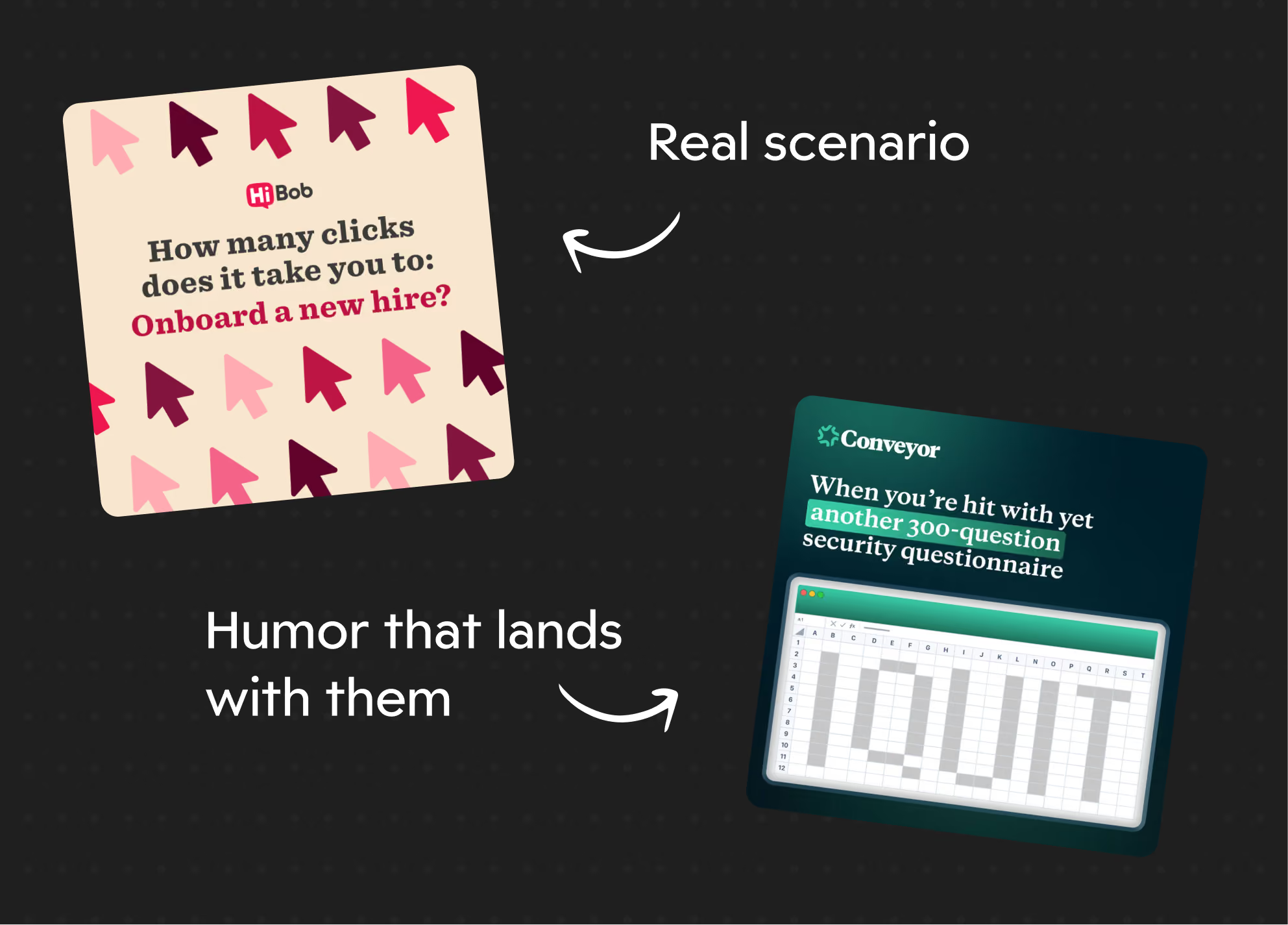
This isn’t just a persona slide with facts and characteristics that, let’s be frank, are more about leading with your product. This is a deep read of your audience with:
- real and highly specific scenarios they experience
- terminology they actually use
- questions they’re asking peers and colleagues about
- their style of communication e.g., the particular sense of humor that lands with them
The examples below show what that looks like in practice. The more specific you can get in this context, the more useful the brief becomes for producing a distinctive outcome.
✦ Find one golden thread
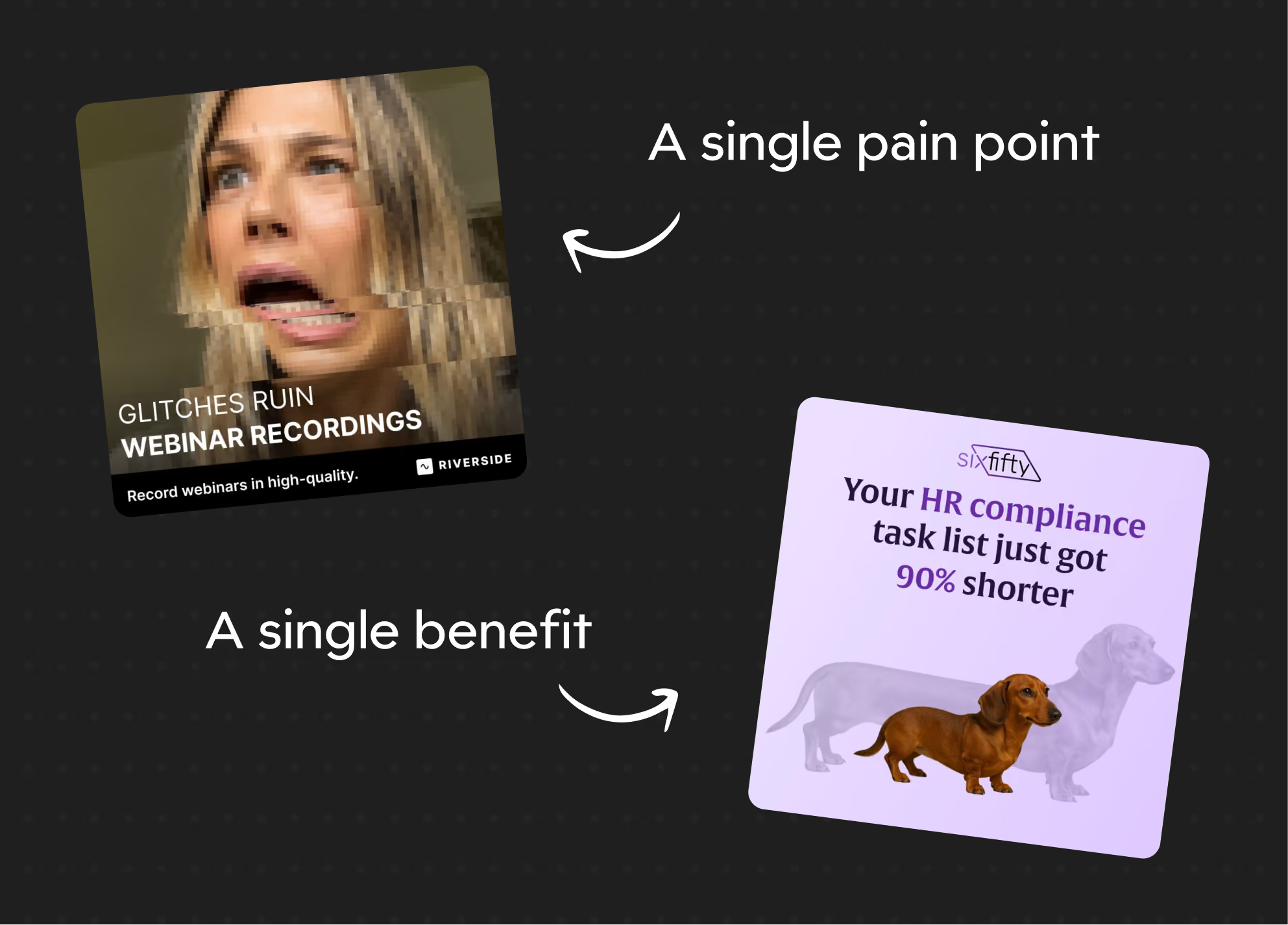
Once you have a good grasp of the audience, resist the urge to include everything under the sun about your product. The brief shouldn’t communicate every pain point, benefit and capability even if you perceive them to be important. When everything is important then nothing is important enough to earn your audience’s click or a place in their mind.
Instead, focus on one narrowly-targeted angle that’s more top of mind for your audience at that given moment and serves your product positioning. That focus gives the creative direction without cluttering the final design.
In both examples below, there’s only one angle highlighted at a time: one pain point and one benefit. And as a result the ads immediately capture attention and stand out.
✦ Audience “temperature” and awareness stage
There’s a more strategic piece of context about your audience you should include in the brief to ensure the ad resonates and also matches your demand objectives. As much as we want our audiences to be ready to buy at any given moment, that’s not what the purchase path looks like for most B2B SaaS brands.
So the brief should include how aware the audience is already:
- Do they still need to understand their problem better and why it’s happening?
- Are they actively searching for answers and solutions to fix it?
- Are they potentially already comparing products and approaches?
The answer changes what the creative needs to convey to stand out and do its job.
The examples across the awareness spectrum show how different ads can speak to different points along the way, though this journey is rarely linear.
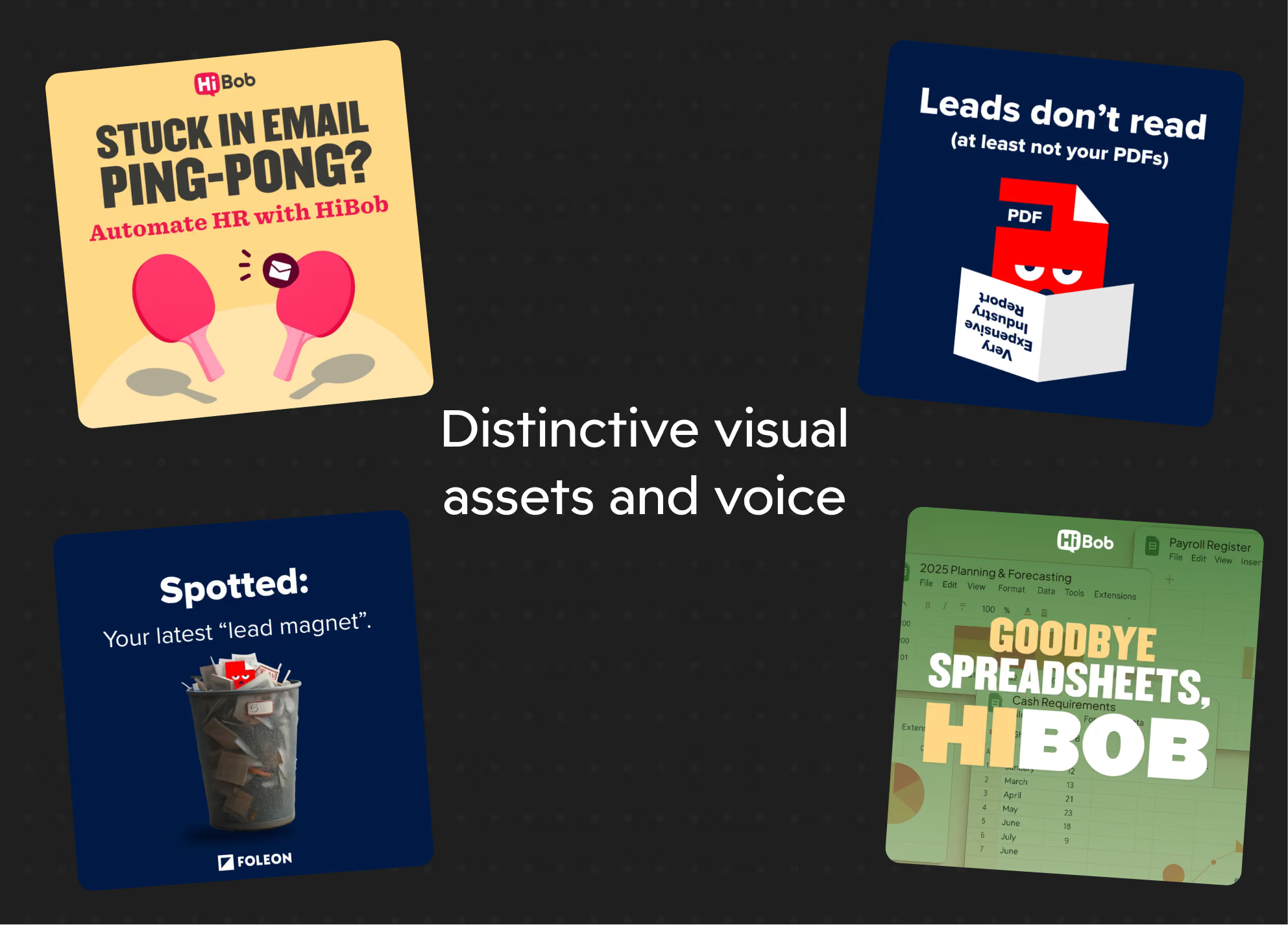
✦ Give the ad something undeniably yours
There’s one more element to consider at this stage: what can give the concept a recognizable effect that the designers can build on.
That might come through a distinctive voice, mascot, visual enemy, etc. This is where you need to tap into your brand identity wisely.
You can see some excellent examples from Folean and HiBob below.
⚠️ 2 common traps to watch out for
In our experience, two things break briefs most often. The first is a brief that keeps changing direction after the work has started.
The second is treating copy and design as separate jobs: the copy is written, then handed to a designer to make it look good, and the two never become one idea. Distinctive ads are not assembled at the end. They are conceived as a single thing from the start.
“An ad only works when it's treated as a single thing. Copy and design aren't two separate deliverables that get assembled at the end. They're one concept that needs to be developed together, with someone who understands both the marketing logic and how to express it visually.”

Co-founder & Creative Director

Three principles behind work
that stands out
In addition to the practical aspects of the brief, in our experience these three principles tend to be true of the concept itself. On the surface, they seem simple but in practice, they’re hard to follow because each one cuts against a reflex many teams have.
✦ Keep an open mind
Set aside the rigid brand guideline book and be willing to present the product, the benefit, the outcome, or the pain point from an angle, tone, or visual you haven’t tried before. This isn’t a licence to ship the next unhinged idea; it is permission to be interesting, and customer-first, at the same time. A little creative spice goes a long way.
The easiest way to find those fresh angles is to keep a steady diet of great ads from outside your category, which is what a library like Adfolio is for. The more range you’re exposed to, the less likely you are to default to the same safe formats everyone else in your space is running.

✦ Be intentional and clear
The most common mistake we see is the over-engineered concept, too clever or too creative (often just for the sake of being creative rather than effective), so that when it hits a feed it takes more than two or three seconds to understand and the viewer scrolls past.
Make the idea instantly graspable. Break down the information for the viewer rather than asking them to do the cognitive work.
✦ Build in the missing context
You know every way your product connects to your prospect's life. Your prospect does not, at least not yet. Assumptions are the enemy, so conceptualize it for a first-time viewer, with just enough information to make the message immediately understandable, without overloading it with text or extra visuals.
Where bold ideas go to die,
and how to save them
A distinctive idea rarely dies from a single bad decision. It gets worn down gradually. The more people who have a say, the more each one removes an edge on the way to launch, until the work that ships offends no one internally and is remembered by no one externally.
“The more people have a say, the more complicated it gets to actually push the ad out and react to market changes, react to what a competitor is doing. You lose the momentum, the agility, the edge, because the more stages you have, the more the ad gets polished down. And even with fewer stages, if you’re a smaller startup and the founder has the last say, that’s already enough to kill an idea if they don’t want it.”

CCO & COO

Knowing where an idea dies tells you what to defend. This is what the experts we spoke to shared about what has worked for them in the past:
✦ Give every idea a proper presentation, never a raw mock-up
A bold concept shown raw and stripped of your thought process, can come across as a risky move or simply just flat.
But when you show the insight behind it, the audience it is for, and the direction it came from, it looks like a considered decision. So sell the thinking and outcomes you’re aiming for, not just the concept itself.
✦ Decide who owns the call before the debate starts
Distinctiveness gets diluted when roles are undefined and everyone weighs in equally. Name the person who owns the concept and give them the final say on it. This ensures that feedback improves the work where it makes sense based on the judgment of the owner instead of watering it down.
✦ Keep the approval chain short enough
to stay sharp
Every extra layer is another chance to retreat to the safe option and design decisions. The teams that protect distinctiveness keep decisions close to the people making the work rather than having them wait for permission from a long list of team members.
✦ Get creative direction on the table early
One more defence sits upstream of all of this and it’s important to keep in mind. Show direction early, before the brief narrows everything.
Bringing creative references and examples to the table, alongside ideas for the brand's own ads, keeps the conversation pointed at what’s possible before settling for the safer bets.
We asked the experts
There’s no single formula for measuring ad performance. But there are a few things worth looking at and thinking about to understand what’s working, what isn’t and why.
Since concept and design is our bread and butter at Diligent Studios, we asked Ivars Krutainis, (Founder at Otter), Maximilian Herczeg (COO & CCO at Talify) and Rob Muldoon (Founder at Tuned Social) about where teams should start and what they should prioritize.
Before you decide why your ad creative is or isn’t performing, what should you get clear on?



More creative examples
Outside of the definitions, here are more creative examples courtesy of Sagih Keinan (Sr. Director, Performance Creative at HiBob) and Chiara Verdoliva (Brand & Creative Lead at Foleon):
What creative distinctiveness
comes down to
The teams creating more stand-out ads are the ones who decided what makes their work unmistakably theirs, then had the commitment to protect it all the way to launch.
This is the work we do at Diligent Studios, and why we do it. We help B2B SaaS teams find the ideas and creative direction that set them apart, then bring those to life through concept and design.
If that’s the gap you need to close in your ads before Q4 ends, we’d be glad to help you get there.

Contributors
Our thanks to the 82 marketers who answered the survey honestly, and to the experts and practitioners who lent their expertise and candor to this report. The survey surfaced the patterns. The experts gave them depth.
Sagih Keinan
Sr. Director, Performance Creative
Shlomo Genchin
Creative director
Chiara Verdoliva
Brand & Creative Lead
Maximilian Herczeg
CCO & COO
Rob Muldoon
Founder
Ivars Krutainis
Founder